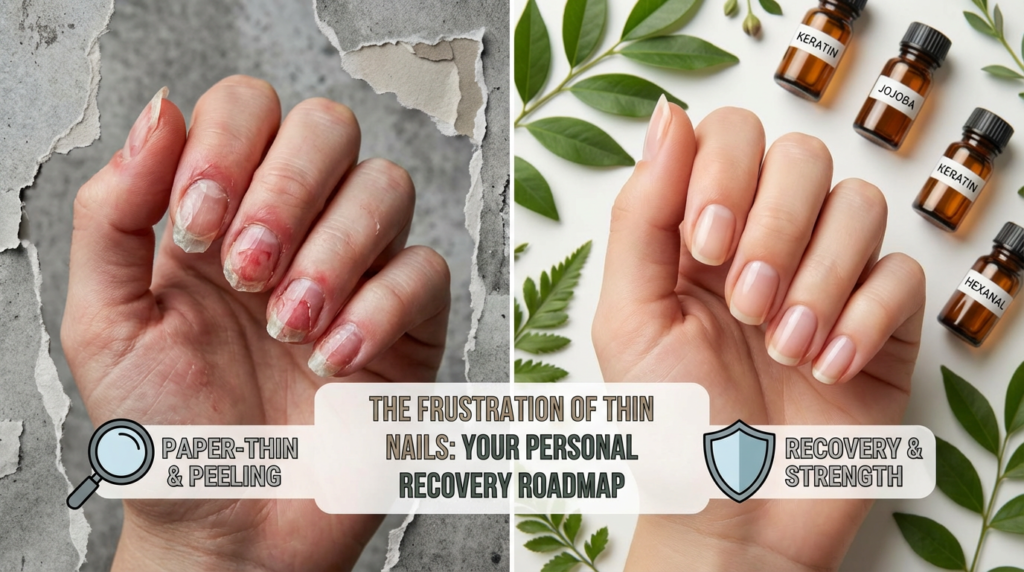
The Frustration of Paper-Thin Nails: Why Recovery is Personal
We’ve all been there—that sinking feeling when you look down at your hands after a gel or acrylic removal and see nails that look more like wet paper than actual protective plates. They’re raw, they’re peeling, and honestly, they kind of hurt. If you’re at the point where your nails bend at the slightest touch, you aren’t just looking for a polish; you’re looking for a rescue mission.
The search for the best nail strengthener for weak nails usually starts in a moment of panic. But here’s the thing: most of us grab the first shiny bottle labeled “hardener” at the drugstore, only to find our nails becoming so brittle they snap if we even look at them wrong. At UNNAIL, we think it’s time to move past the quick fixes and look at the actual science of how a nail heals.
What’s Actually Happening to Your Nail Plate?
When you’ve had back-to-back salon services, your nails aren’t just “tired”—they are physically depleted. The layers of keratin that make up your nail plate have been stripped, often by aggressive filing or too much time soaking in harsh acetone.
1. The Loss of Natural Lipids
Think of your nail layers like shingles on a roof. Acetone dissolves the “glue” (natural oils and lipids) that keep those shingles flat. Once those oils are gone, the layers lift, leading to that annoying peeling we all hate.
2. The Risk of Onycholysis
It sounds scary, but it’s just the technical term for the nail lifting away from the bed. This happens when the nail gets so thin it loses its structural integrity. Investing in a high-quality keratin nail treatment isn’t just about vanity; it’s about keeping your nail attached to your finger.
3. Reclaiming Your Confidence
There’s a certain understated elegance in healthy, natural nails. Shifting away from bulky extensions toward a strong, clean look isn’t just a trend—it’s a commitment to your own wellness. You shouldn’t have to hide your hands during a meeting because of a ragged manicure.
Common Mistakes: How We Secretly Sabotage Our Growth
Before you even touch a bottle of natural nail repair products, you have to stop the damage cycle. In fact, many of the habits we think are helpful are actually making things worse.
- The Buffing Trap: I’ve noticed a lot of people try to “smooth out” ridges on thin nails. Please, stop. You’re essentially sanding away the little protection you have left.
- The “Hardener” Myth: If a product makes your nails feel like rock instantly, it likely contains formaldehyde. While it feels strong, it makes nails so rigid they shatter on impact instead of bending.
- Picking at Polish: It’s tempting, but picking at lifting gel tears away the top layers of your natural nail cells. It’s the fastest way to thin nails.
- Ignoring the Cuticle: Your cuticle is the seal that protects the new nail growing underneath. If it’s dry or damaged, the new nail will come out weak and ridged.
The “Nerdy” Side: Ingredients That Actually Work
Dermatologists often describe the nail as a “keratin sandwich.” To fix a broken sandwich, you need the right ingredients to bond it back together. When looking for a strengthening base coat, check the label for these specifics:
- Hexanal: This is a game-changer. It’s a non-toxic aldehyde that strengthens the nail without making it brittle like formaldehyde does.
- Alpha Hydroxy Acids (AHA): These help resurface the nail and keep it hydrated.
- Biotin and Silica: These provide the internal and external building blocks for thickness.
- Jojoba Oil: Because its molecular structure is so close to our natural oils, it can actually penetrate the nail plate to provide flexibility.
Your 30-Day Recovery Roadmap
Real talk: nails take 3 to 6 months to grow out completely. But you can see a massive difference in how they feel in just a few weeks if you follow a protocol.
1. The Detox Phase
Commit to four weeks of no gels, no acrylics, and no dip. Your nails need to breathe and stabilize.
2. The Seal and Shape
Keep your nails short for now to avoid snags. Use a glass nail file—they grind the nail edge smoothly and seal the keratin layers together, unlike emery boards which can cause microscopic tears.
3. The Hydration Rule
Apply cuticle oil at least three times a day. If you can, do an overnight treatment with cotton gloves and a thick layer of jojoba-based oil. It’s a total game-changer for peeling.
4. The Lamination Technique
Instead of one thick coat of nail hardener for peeling nails, apply one very thin coat every twond day. This builds a laminated, flexible shield that’s way stronger than a single thick layer.
Choosing Your Formula: The Longevity Score
We’ve broken down the most common types of products based on how they actually impact your long-term nail health.
| Product Type | Repair Strength | Toxicity | Longevity Score |
|---|---|---|---|
| Keratin Infusion | High | Ultra-Low | 9/10 |
| Mineral Base | Medium | Low | 7/10 |
| Traditional Hardener | Very High | High | 3/10 (Use sparingly) |
| Botanical Shield | Light | Zero | 8/10 |
Expert-Backed Recommendations
If you’re wondering which specific route to take, here are a few directions based on your current nail state:
- If your nails feel “sore”: Go for a keratin nail treatment. It mimics your natural protein to bond damaged cells back together without being aggressive.
- If your tips are splitting: Look for a mineral-rich formula with calcium or magnesium. It acts like a glue for the free edge.
- If you want a clean start: Botanical shields using celery seed or horsetail are fantastic for the eco-conscious user who wants zero chemicals but needs that extra layer of thickness.
Frequently Asked Questions
How long until I see a change?
To be honest, you’ll feel more strength in about two weeks. But for a total transformation? You’re looking at about 3 to 4 months for a completely new, healthy nail to grow from the root to the tip.
Can I wear any polish during recovery?
Actually, wearing a strengthening base coat is better than leaving nails naked. A naked, damaged nail is vulnerable to water and household cleaners. Just make sure your polish is “10-free” or better.
Is Biotin worth the hype?
It’s not a magic pill, but it provides the building blocks. Think of it as the raw materials your body needs to make the strengthener work better from the outside.
Rebuild, Don’t Rush
Getting back to healthy, natural nails is a marathon, not a sprint. It’s easy to get frustrated when things don’t look perfect after a week, but your body is doing the hard work of healing living tissue. By swapping toxic old-school products for science-backed, clean alternatives, you’re giving your nails a fighting chance.
Ready to ditch the damage? Take our Nail Recovery Quiz to find your personalized product match, or join our Strong Nail Society newsletter for more weekly tips on keeping your hands healthy and beautiful.