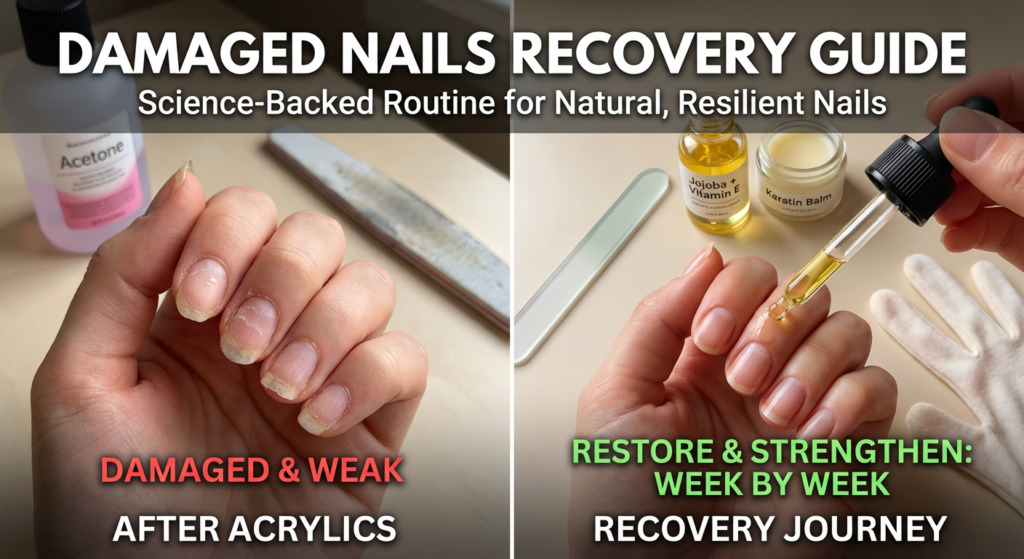
You know the feeling. The technician soaks your hands in acetone for twenty minutes, scrapes away the remaining residue, and suddenly, your natural nails are exposed. They aren’t the strong, healthy nails you remember. Instead, they are paper-thin, sore to the touch, and peeling at the edges.
If you are looking for how to repair damaged nails after acrylics, you aren’t alone. While the aesthetic of a fresh set is undeniable, the mechanical filing and chemical bonding required for acrylics often leave the natural nail plate compromised. To be honest, it’s a bit of a shock the first time you see the damage underneath.
The mistake most women make is searching for a “quick fix” or, worse, covering the damage with another set of gels or acrylics. True recovery isn’t about hiding the damage—it’s about rebuilding the keratin structure from the inside out. In this guide, we will walk you through a science-backed nail recovery routine to restore your nails to their natural, resilient glory.
Common Nail Recovery Mistakes to Avoid
Before we dive into the solution, we must address the habits that sabotage your progress. One thing I noticed is that many products marketed as “strengtheners” actually do more harm than good during the initial recovery phase. In fact, they can make the situation much worse.
1. Over-Buffing
When nails look ridged or flaky, the instinct is to buff them smooth. Stop immediately. Your nails are already thin; buffing removes more precious keratin layers, making them even more prone to snapping. It’s like sanding down a piece of paper that’s already tearing.
2. Using Harsh Hardeners
Many traditional nail hardeners use formaldehyde to cross-link keratin fibers. While this makes the nail feel “hard” instantly, it makes them inflexible. To fix thin nails, you need flexibility, not just hardness. If a nail is too hard, it will shatter like glass upon impact.
3. Peeling and Picking
If there is any lingering product, never peel it off. This literally rips the top layers of your natural nail off with the product. Always use a gentle, professional removal method, even if it takes a little longer.
4. Ignoring the Cuticle
The cuticle is the “seal” that protects the new nail growing underneath. If you skip cuticle care, you are essentially leaving the “engine” of your nail growth unprotected and dehydrated. Think of it as the foundation of the entire recovery process.
Why Proper Nail Recovery is Essential for Your Health
When you decide to repair damaged nails after acrylics, you are doing more than just fixing an aesthetic issue. The nail plate is composed of approximately 50 to 100 layers of compacted keratin cells. Acrylics involve “roughing up” these layers with a drill or coarse file to ensure adhesion. It’s heavy-duty work for such a delicate part of your body.
If you ignore the damage or continue to apply harsh chemicals, you risk:
- Onycholysis: The separation of the nail plate from the nail bed, which can lead to infection.
- Chronic Brittleness: Permanent changes to the nail’s growth pattern.
- Sensitivity: Painful, throbbing nail beds that react to hot or cold water.
By following a structured plan to restore nails after gel polish and acrylics, you protect the nail matrix—the area where new nail growth begins—ensuring that the new nail emerges stronger than the last.
Your 4-Week Plan to Repair Damaged Nails After Acrylics
Recovery doesn’t happen in a day. It takes roughly 4 to 6 months for a nail to grow from the cuticle to the free edge. However, you can significantly improve the look and feel of your nails within 30 days. Here is a realistic timeline.
1. The “Reset” Week (Days 1–7)
The first seven days are about stabilization. Keep them short—long, thin nails will snag and tear. Ditch the emery boards and switch to a glass file to seal the keratin edges rather than fraying them. Apply a high-quality cuticle oil 3–4 times a day. Look for oils containing Jojoba or Vitamin E, which can actually penetrate the nail plate.
2. The Rebuilding Phase (Weeks 2–3)
Now that the nails are stable, focus on protection. Try the “Soak and Seal” method: soak your nails in warm water for 5 minutes, then immediately apply a thick balm or oil to lock in moisture. Use a non-toxic, breathable base coat to protect the thin nail from water absorption while allowing oxygen to reach the surface.
3. Strengthening and Maintenance (Week 4+)
By week four, you should notice less sensitivity. Focus on nutrition—Biotin, collagen, and silica support the nail matrix from within. Also, wear gloves when washing dishes. Water is a major “solvent” for damaged nails; it weakens the bonds between keratin layers more than most people realize.
Pro-Tip: The UNNAIL Keratin Recovery Serum is a helpful addition here. It utilizes biomimetic keratin to fill in the gaps of damaged nail plates, making it great for those whose nails feel “paper-thin.”
Clean Nail Care Swaps for Stronger Natural Nails
Traditional nail products are often loaded with toxic chemicals. When your nails are compromised, these chemicals can migrate into your bloodstream more easily through the thinned nail plate. Making a few intentional swaps can change everything.
- Swap Acetone for Soy-Based Removers: Acetone is a powerful solvent that strips every drop of moisture. Soy-based alternatives are slower but leave the nail hydrated.
- Swap Emery Boards for Glass Files: Glass files have a much finer grit that prevents microscopic “tearing.”
- Swap Formaldehyde Hardeners for Peptide Strengtheners: Peptides help the nail grow without making it dangerously brittle.
- Swap “Fast-Dry” Drops for Pure Jojoba Oil: Fast-dry products usually contain alcohols that dehydrate the nail. Jojoba oil protects the polish while nourishing the cuticle.
Comparison Table: Recovery Methods
| Product Type | Repair Strength | Toxicity Level | Longevity Score |
|---|---|---|---|
| Traditional Hardener | High (Immediate) | High | 3/10 |
| Natural Oils | Moderate | Zero | 9/10 |
| Keratin Serums | Very High | Low | 10/10 |
| Biotin Supplements | High (Internal) | Zero | 8/10 |
FAQ: Frequently Asked Questions
How long does it take to repair damaged nails after acrylics?
The initial soreness usually fades within a week. However, to fully repair damaged nails after acrylics, you must allow the damaged section to grow out completely. This typically takes 4 to 6 months for fingernails. It’s a marathon, not a sprint.
Can nails fully recover from gel damage?
Yes. Unlike permanent skin scarring, nails are constantly regenerating. If you provide the right environment—hydration and protection—your nails will eventually return to their natural state of health.
Should I stop wearing polish during nail recovery?
You don’t necessarily have to go “naked,” but you should avoid traditional polishes. Using a non-toxic, oxygen-permeable treatment polish can actually protect thin nails from water damage while they heal. It acts like a little security blanket for the nail plate.
Conclusion: Healthy Nails are Rebuilt — Not Rushed
Learning how to repair damaged nails after acrylics is a journey of patience. It’s tempting to reach for a quick fix when your nails look thin and dull, but the only way to achieve lasting results is to respect the biological growth cycle. In my experience, the results are worth the wait.
By switching to cleaner options, focusing on deep hydration, and protecting your nails from harsh chemicals, you can transform your hands. Remember: your nails aren’t “bad”—they are just recovering. Treat them with a little kindness, and they will grow back stronger than ever.